
Getting the right boot size sounds straightforward until you are standing in a shop with one foot that feels snug and a heel that slips every time you take a step. Boot fit is more nuanced than standard shoe sizing, and the consequences of getting it wrong go beyond discomfort. Blisters, ankle instability, and long-term foot problems can all trace back to a boot that was never the right fit to begin with. This guide walks through everything you need to check before committing to a pair.
Complete Guide Why Boot Fit Matters More Than You Think
A poorly fitted boot does not just feel uncomfortable. A boot that is too loose allows the foot to slide forward on every downhill step, putting pressure on the toes and creating friction that leads to blisters. A boot that is too tight restricts blood flow, causes numbness, and can contribute to ingrown toenails and nerve compression over time.
The challenge with boots specifically is that there are more variables at play than with regular shoes. You are not just thinking about length. Heel width, forefoot width, calf circumference for taller styles, shaft height, and the flex point of the sole all determine whether a boot actually works for your foot. Knowing what to look for in each area makes the difference between a boot you reach for every day and one that sits at the back of the wardrobe.
The Complete Guide Five Key Areas to Check
The Toe Box
Your toes need room to move. A well-fitted boot should allow roughly a thumb’s width of space between the tip of your longest toe and the end of the boot. This accounts for the natural forward movement of the foot when walking and the swelling that happens over the course of a day. If your toes are pressing against the front of the boot when you stand, the boot is too short. If there is significantly more than an inch of space, it is too long and your foot will slide forward with every step.
Toe box height matters too, particularly for wider or higher-arched feet. A toe box that is too shallow will press down on the tops of the toes and cause discomfort even when the length is correct.
The Heel
A small amount of heel movement is normal, particularly with new leather boots that have not yet broken in. Up to a quarter of an inch of slip when you walk is generally acceptable. More than that, and the boot is too large or the heel cup is the wrong shape for your foot. A heel that slips excessively creates friction at the back of the ankle, which leads directly to blisters.
The heel should feel held without feeling clamped. There should be no rubbing at the Achilles tendon and no sensation of the heel being pinched from the sides. If the only way to stop heel slip is to lace the boot so tightly that the forefoot feels compressed, the boot is not the right fit for your foot shape.
The Complete Guide Forefoot and Width
The widest part of your foot should sit at the widest part of the boot’s sole. If the boot is too narrow, you will feel the sides of the upper pressing against the ball of your foot. If it is too wide, the foot will roll inward slightly with each step, reducing stability and increasing fatigue over distance.
Boot widths typically run from narrow through to extra wide. Standard sizing tends to assume a medium width, so if you consistently find standard boots uncomfortable across the forefoot, it is worth measuring your foot width and looking for brands that offer multiple width options.
The Complete Guide Arch
The arch of the boot’s insole should make contact with the arch of your foot without pushing into it. A boot with too much arch support in the wrong position creates a pressure point that becomes increasingly uncomfortable over time. A boot with no arch support at all can contribute to fatigue on longer walks. If the factory insole does not suit your foot, an aftermarket insole cut to your arch profile is a straightforward fix that significantly improves fit and comfort.
The Flex Point
The flex point is where the boot bends as you walk, roughly at the ball of the foot. This should align with the natural flex point of your foot. If the boot flexes too far forward or too far back relative to where your foot bends, every step creates unnecessary strain. You can check this by holding the boot and bending it: the point where it folds most naturally should correspond to the widest part of the forefoot area.
Complete Guide How Different Boot Styles Should Fit
Ankle Boots
Ankle boots should fit snugly around the ankle without any gap between the upper and the ankle bone. Too much space at the ankle allows the foot to shift inside the boot, which affects both comfort and the overall look of the boot. The shaft should sit close to the ankle without digging in or creating pressure on either side of the ankle bone.
With lace-up ankle boots, you have more flexibility to adjust the fit through how you lace them. With slip-on styles such as those with elastic side panels, the fit depends entirely on the shape of the last, so it is worth trying them on with the socks you intend to wear them with.
Chelsea Boots
Chelsea boots rely on the tension of the elastic side panels to keep them on the foot, which means the fit needs to be right from the start. They should feel snug across the instep and around the ankle. If the elastic panels gap or if the boot slips off easily at the heel, the boot is too large. If getting them on requires significant effort and the panels feel stretched flat against the side of the foot, the boot is too small.
A small amount of initial resistance when pulling on a Chelsea boot is normal. The fit should feel secure once the boot is on but not constricting.
Knee-High Boots
Knee-high boots introduce the additional variable of calf fit. The shaft should sit close to the leg without creating a tourniquet effect or leaving large gaps of air between the boot and the calf. Most standard knee-high boots are designed for a calf circumference of roughly 35 to 38 centimetres. If your calf sits outside this range, standard sizing will rarely give you a comfortable fit, and it is worth looking at brands that offer multiple calf widths.
The shaft height should also suit your proportions. A boot that cuts across the widest part of the calf rather than sitting below or above it will feel restrictive and look awkward.
Combat and Lace-Up Boots
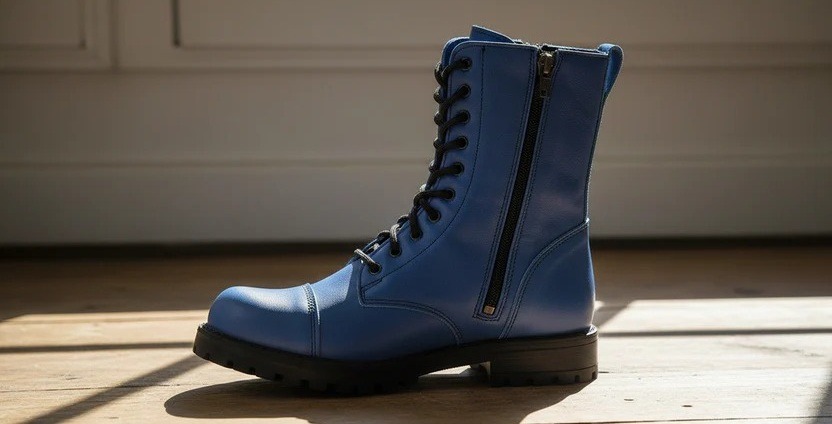
Lace-up boots give you the most control over fit, since you can adjust tension across different parts of the foot independently. The boot should feel firm and supportive around the ankle, with enough room in the toe box to wiggle your toes freely. Lace them firmly enough that the heel stays in place but not so tightly that you feel pressure across the top of the foot.
Calf Fit for Tall Boots
How to Measure Your Calf
Stand with your weight evenly distributed and measure around the fullest part of your calf, typically about a third of the way up from the ankle. Take the measurement while wearing the socks you plan to wear with the boots. For a comfortable fit in a knee-high boot, you generally want around one to two centimetres of ease beyond your calf measurement. If you plan to tuck jeans or trousers into the boot, account for that additional volume when checking the shaft circumference.
Regular vs Wide Calf Options
Standard knee-high boots are built around a narrow range of calf sizes, which means a significant proportion of women find them uncomfortable or impossible to zip up. Wide calf boots are not a niche product any more. Many reputable footwear brands now offer the same styles across several calf widths, allowing you to find a fit that works for your leg shape without compromising on the style you want.
Common Fit Problems and How to Fix Them
Heel Slipping
If the heel slips but everything else about the fit feels right, try a heel grip insert. These adhesive pads add padding to the inside of the heel cup and reduce the space that allows the foot to lift. For lace-up styles, a heel-lock lacing technique, where the laces cross through the top two eyelets to create a lock above the ankle, can eliminate heel movement without tightening the rest of the lacing.
Toe Pinching
Toe pinching is most common in pointed or narrow toe box styles. If the pinching is slight and confined to the sides of the toes rather than the tip, a boot stretcher used overnight can create a small amount of additional width. If the toe box is pressing down on top of the toes, stretching will not help and the boot is simply the wrong shape for your foot. Leather uppers will soften with wear, but they will not reshape structurally.
Calf Too Tight or Too Loose
A calf that is too tight can usually be addressed with a boot stretcher designed for shaft width, or by a cobbler who can stretch the shaft professionally. A calf that is too loose is harder to fix. Wearing thicker trousers or an extra layer tucked into the boot adds volume, but the shaft will always look slightly shapeless. The more reliable solution is to find a boot designed for a narrower calf width from the outset.
Complete Guide Sizing Tips Before You Buy
When to Size Up
Size up half a size if you have wide feet, a high instep, or plan to wear thick socks regularly. It is also worth sizing up if you are buying boots for walking or hiking, where feet swell over the course of several hours. Buying online without trying first is another reason to err slightly larger, since you can always add volume with insoles or thicker socks but you cannot make a boot bigger once you own it.
How Complete Guide Socks Affect Fit
Always try boots on with the socks you intend to wear them with. A fine-denier sock and a thick wool hiking sock can change the fit by half a size or more. For fashion boots worn with tights or thin socks, the fit needs to be snug enough that the boot does not feel loose. For walking or outdoor boots worn with thicker socks, you need the additional room that accounts for that extra layer.
Leather vs Synthetic: How Materials Stretch
Full-grain leather will soften and mould to the shape of your foot over time, which means a boot that feels slightly firm when new will often become significantly more comfortable after a few weeks of wear. Synthetic materials do not behave the same way. A synthetic boot that feels tight when new is unlikely to loosen noticeably. This is worth factoring in when deciding whether to size up during a break-in period or whether the boot simply does not fit.
Complete Guide Find Boots That Actually Fit
Understanding fit is only useful if you have the right boots to work with. A well-constructed boot in the right shape for your foot will always outperform a poorly built one, regardless of how carefully you size it.
If you are looking for a range that covers multiple styles with genuine build quality, the Boots collection at Buzza Store covers ankle styles, knee-high options, and everything in between, giving you a starting point that works across different fit requirements and occasions.
For a broader look at styles that pair well with the right footwear, buzzastore brings together a curated selection built around pieces that hold up to real wear. Getting the fit right from the start means you wear what you buy, and that is always the point.
Visit More : magazineness.co.uk
