
Introduction
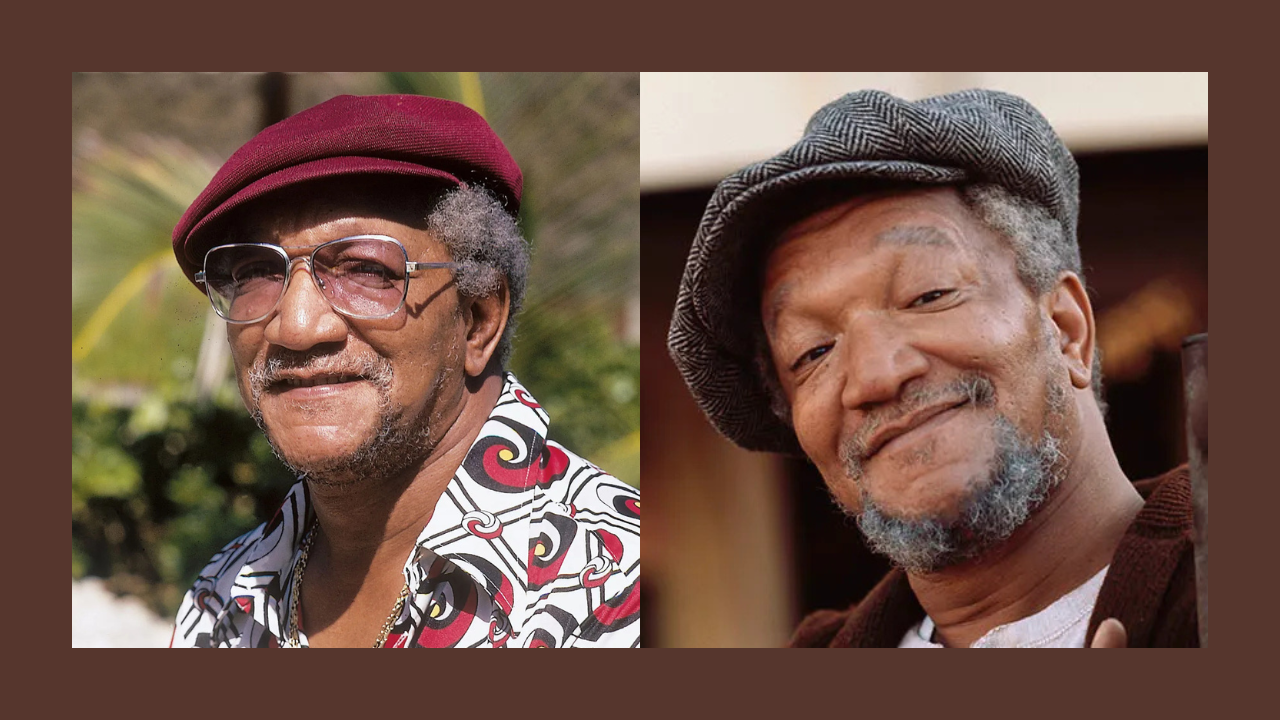
Redd Foxx — born John Elroy Sanford — remains one of the most influential and controversial entertainers of the 20th century. While much has been written about his career, stand‑up comedy, and television shows, less attention is often paid to the personal side of his life: his family background, his relationships, his children (or adopted children), and what became of his estate. In this article, we explore those facets — the man behind the laughter — focusing on Redd Foxx’s father and upbringing, his marriages and spouse(s), his children (or adopted child), and his financial legacy.
Redd Foxx Early Life and Family Background
Redd Foxx entered the world on December 9, 1922, in St. Louis, Missouri. His birth name was John Elroy Sanford. His father, Fred Sanford, worked as an electrician and auto mechanic. However, when Redd was about four years old, his father left the family. This abandonment drastically changed the trajectory of young John’s childhood. Following his father’s departure, his mother, Mary Hughes (also referred to as Mary Sanford Carson), moved to Chicago in search of work.
Redd Foxx was initially raised by his grandmother and later by his mother with his siblings, growing up amid hardship and instability. He had at least one older brother, Fred Jr.; another brother, Leonard, died in infancy. His childhood in Chicago, living under modest means, and moving from his birthplace influenced much of his early life experiences.
Despite these challenges, he showed early signs of creative drive. While attending (briefly) high school at DuSable High School, he formed a washtub band with friends. That early immersion in performance and entertainment would eventually set the stage (literally) for his later success.
The absence of his father from an early age and being raised primarily by his mother and grandmother influenced his resilience, self-reliance, and sharp observational humor.
Redd Foxx Marriage and Spouse(s)
Over the course of his life, Redd Foxx was married four times. These marriages reflect different chapters of his personal life.
- His first marriage was to Evelyn Killebrew in 1948. That union lasted only a few years, ending in divorce in 1951.
- His second and perhaps most significant marriage was to Betty Jean, a showgirl and dancer, in 1956. It was during this marriage that significant personal developments occurred — not only in terms of family, but also in how Foxx structured aspects of his personal and financial life.
- After divorcing Betty Jean (the separation reportedly occurred in 1974), he went on to marry again spouses listed as Yun Chi Chung (married in 1976) and later Ka Ho Cho (married in 1991).
The marriage to Betty Jean had a significant impact on his personal life: she reportedly gave up her own entertainment career to focus on domestic life, managing many aspects of Foxx’s business ventures — including a chain of record stores in Los Angeles.
Despite such efforts to organize his personal and business life, their marriage ended. The reasons reportedly stemmed from Foxx’s infidelity.
Through his multiple marriages, Foxx’s personal life was complex. His spouses and relationships shaped not only his private life but also family connections and financial affairs, as seen in later challenges with taxes and property seizure
Redd Foxx Children and Descendants
When discussing the children of Redd Foxx, the story is somewhat different than might be expected from a public figure of his fame. Redd Foxx did not have biological children of his own. Rather than biological offspring, what stands out is his relationship with an adopted daughter from his second wife’s prior life: Debraca Denise.
Debraca was born around 1947 in St. Louis, Missouri. Her biological father’s identity appears not to be publicly documented; when her mother married Redd Foxx in 1956, Debraca was about nine years old. At that time, Foxx adopted her, giving her his surname.
As for her life and legacy, Debraca became the central family connection to Foxx after his death. She reportedly inherited part of his estate and maintained the family legacy in her own way. Public details about her life and career remain modest, but her role in Foxx’s family is widely acknowledged.
Some sources suggest Redd Foxx had “no children,” highlighting the complexity of public records and personal histories — especially for personalities whose private lives were sometimes guarded or undocumented.
Thus, while Redd Foxx may not have had biological children, his familial legacy lives on through his adopted daughter and the memories, stories, and estate tied to him.
Redd Foxx Net Worth and Financial Legacy
Given Redd Foxx’s enormous success as a comedian and actor, many assume his net worth was vast and stable at the time of his death. The reality, however, was far more complicated and, in many respects, tragic.
At his peak, Foxx reportedly earned as much as US$4 million in a single year. Additionally, his deal for the television show that made him a household name included a lucrative contract, making him among the highest‑paid actors on television.
Despite that level of income, Foxx struggled with financial mismanagement, reportedly extravagant spending, and poor oversight. After divorces — especially from Betty Jean — legal and support payments reportedly drained substantial resources.
By the 1980s, Foxx had run into serious financial difficulties. According to some sources, he filed for bankruptcy in 1983. The U.S. Internal Revenue Service reportedly placed liens on his property for unpaid income taxes for several years, and ultimately seized his Las Vegas home along with several vehicles, including luxury cars, to satisfy debts and tax obligations.
Because of these issues, estimates of Foxx’s net worth at his death are conflicting. Some sources indicate a negative net value — essentially a substantial debt — while others describe small positive valuations. Overall, the financial legacy of Redd Foxx is a cautionary tale: despite significant earning power and fame, poor financial management, heavy personal spending, and the pressures of multiple marriages and legal obligations ultimately eroded much of what he earne
Redd Foxx Personal Life and Character Outside the Spotlight
Much of what made Redd Foxx a compelling public figure — his irreverent humor, his confrontational comedy style, his daring to push boundaries — can be traced back, at least in part, to the challenges of his upbringing. Growing up without a father, working through hardship, and living in a working‑class environment instilled in him resilience and a sharp, unapologetic point of view.
As a teenager, he formed a wash‑tub band with friends while at high school in Chicago. Later, he and his bandmates traveled across the Midwest, performing on street corners and in bus stations — a gritty early experience that exposed him to the rougher edges of life.
He adopted the name “Redd Foxx” as a tribute: “Redd” for his red hair and ruddy complexion, with an extra “d” to make it more distinctive — and “Foxx” as a nod to the term “foxy” and for memorability.
Much later in life, as he achieved fame and financial success, he lived a lifestyle far from modest. Yet retrospectives show he faced a contradiction: public adoration and commercial success, coupled with private financial insecurity and mismanagement.
During his marriage to Betty Jean — when she managed many of his ventures — there was an opportunity for structure and stability. However, the marriage ended, reportedly due to infidelity on his part, reflecting turmoil in his personal life.
Foxx’s personality — tough, vivid, unfiltered — mirrored the comedy he produced: bold, unafraid, and rooted in personal experience. While he became widely known for his on‑stage and on‑screen persona, the personal side suggests a man who carried burdens from childhood and adult life, navigating fame and fortune with flaws as real as his success.
Legacy and Impact on Family
Though Redd Foxx’s personal and financial life had many ups and downs, his legacy — especially in terms of family — lives on through his adopted daughter, Debraca Denise. Through her, there remains a human link to his private life and a continuation of the familial lineage tied to Foxx.
At the time of his passing on October 11, 1991, Foxx left behind a complex estate — but also memories, stories, and a name recognized by generations. While debts and misfortune marred the financial legacy, the personal imprint of his life — family struggles, adoption, remains a testament to a life lived in extremes: from hardship to fame, from early abandonment to adopting a daughter and building a family structure of his own.
His story — beyond the comedic persona — offers a glimpse into the personal costs and chaotic realities that often accompany fame. For his daughter, and for those who knew him personally, Redd Foxx was not just a star, but a father figure, a husband (multiple times), and a man who sought belonging and legacy.
Conclusion
Redd Foxx’s life was a tapestry of contrasts. Born John Elroy Sanford in 1922 into a family fractured by abandonment, he grew up without his father, raised by his mother and grandmother in modest circumstances. Yet out of that adversity emerged a remarkable sense of creativity, resilience, and ambition.
Through four marriages, he sought personal stability and companionship; through adopting a daughter, he sought legacy and family continuity. His adopted daughter, Debraca Denise, became the living link to his personal life — and a reminder that for all his fame, Foxx valued familial ties.
Financially, his story is a caution: even immense earning potential can be eroded by mismanagement, poor planning, lifestyle pressures, and legal obligations. Athe faced serious debt, foreclosure, and tax liens — a far cry from the glamour of red carpets and television studios.
But beyond money and fame, the personal story of Redd Foxx — his father leaving him, being raised by his mother and grandmother, adopting a daughter, enduring relationships and heartbreak, living with success and failure — speaks to a human journey: flawed, complicated, resilient.
In remembering Redd Foxx, it matters to remember not just the laughter he brought to so many, but the real human being behind it. A man shaped by hardship, lifted by humor, loved by many, but carrying his own burdens — and, in his own way, leaving behind both legacy and cautionary tale.
