
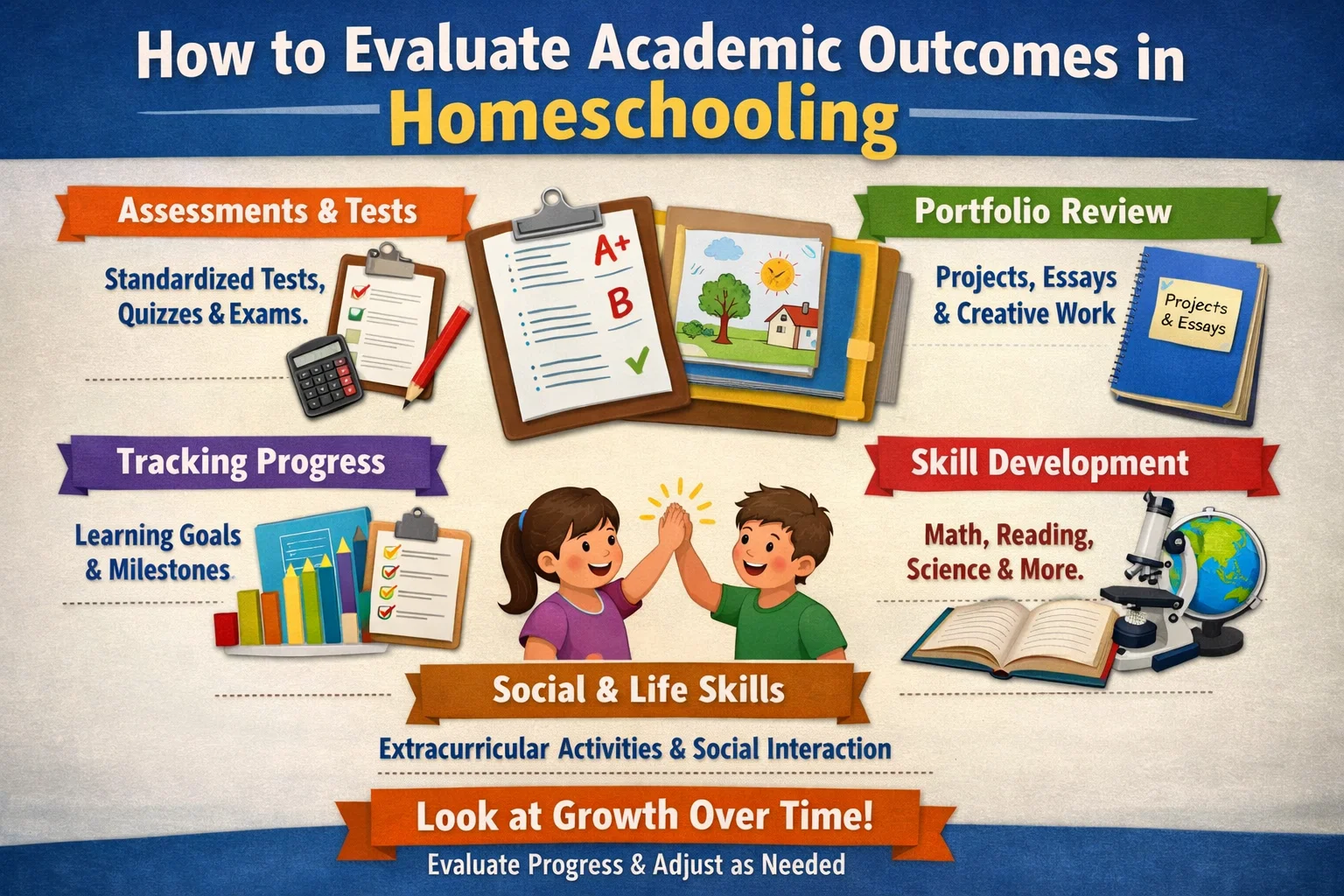
One of the most common questions in home education is also one of the most difficult to answer calmly: How do I know if this is working? The question usually appears after the timetable is in place, lessons are moving, and the early excitement has worn off. At that point, parents are no longer comparing ideas. They are trying to judge progress.
That is why families exploring the best homeschooling programs australia often need more than curriculum recommendations. They also need a clear way to measure whether learning is leading somewhere meaningful. The best homeschooling programs australia do not only help children complete lessons. They help parents notice growth, spot weak areas early, and judge academic outcomes with more clarity and less guesswork.
Academic Outcomes Are Broader Than Test Scores
When parents hear the word “outcomes,” they often think first of marks, levels, or formal assessments. Those can be useful, but they are only one part of the picture. In homeschooling, academic progress often shows up in quieter ways before it appears in obvious results.
A child may begin explaining ideas more clearly. They may read with greater ease, write with better structure, solve problems with less hesitation, or show more independence in how they approach a task. These are academic signs too.
That is why evaluation should not begin with panic over whether the child is “ahead” or “behind.” It should begin with a more grounded question: Is the child learning, retaining, and applying what they are being taught?
Start By Defining What Success Looks Like
Academic outcomes are difficult to measure if parents have not decided what they are actually looking for. Vague expectations make progress harder to recognise.
Before evaluating outcomes, it helps to define success in practical terms.
For example, success may mean:
- Reading with stronger fluency and understanding
- Writing with clearer sentence structure and better organisation
- Building confidence with core maths skills
- Completing work with less prompting
- Showing stronger recall across subjects
- Moving from guided learning to more independent learning
This does not mean lowering standards. It means making progress visible. Once success is described clearly, it becomes easier to track.
Look For Growth Over Time, Not Daily Perfection
One of the easiest mistakes in homeschooling is judging progress too closely, too often. A difficult day can feel like a setback. A distracted week can feel like failure. But academic outcomes are rarely revealed through a single lesson or one off day.
They become clearer over time.
Parents should look for patterns across weeks and months:
- Is reading becoming smoother?
- Is written work becoming more coherent?
- Is the child grasping concepts faster than before?
- Are repeated mistakes reducing?
- Is less reteaching needed in familiar areas?
This longer view is important because real learning often builds gradually. The child may not look dramatically different from one Monday to the next, but over a term, the change can be significant.
Evaluate Understanding, Not Just Completion
It is possible for a child to finish worksheets, tick tasks off, and still not understand the material deeply. Completion can show effort, but it does not always show learning.
That is why parents need to look beyond whether work is done and pay attention to whether the child actually understands it.
Ask The Child To Explain
A simple and effective method is to ask the child to explain what they learned in their own words. If they can describe the idea clearly, use it in a new example, or connect it to something they already know, that usually shows stronger understanding.
Watch For Transfer
A child who has truly learned something can often apply it in a different setting. If they can use a grammar concept in fresh writing, or solve a maths idea in a new form, the learning is more likely to be secure.
This matters because academic outcomes are not only about repeating information. They are about being able to work with it.
Use Samples Of Work As Evidence
One of the most practical ways to evaluate homeschooling outcomes is to keep samples of work over time. These do not need to be elaborate or heavily organised. Even a simple folder can show progress very clearly.
Keep examples such as:
- Early and later writing pieces
- Reading notes or comprehension responses
- Maths work from different points in the term
- Project summaries
- Spelling or grammar tasks
- Independent work completed without much support
Looking back at these samples often shows improvement more clearly than memory alone. Parents may notice stronger structure, better accuracy, greater confidence, or more developed thinking.
This kind of evidence is especially useful because it turns evaluation into something observable rather than emotional.
Pay Attention To Retention
Some children can complete a lesson well in the moment but forget the concept quickly afterward. That is why retention matters.
Academic outcomes should include not only whether the child understood the lesson today, but whether they still understand it later.
Revisit Concepts After A Gap
Return to an idea after a few days or a week. Ask a short question. Offer a small task. See whether the child can recall and use the concept without being reteached from the beginning.
Notice What Stays Secure
When a child begins holding onto core skills over time, that is a strong sign of progress. It means the learning is becoming stable rather than temporary.
Retention is one of the clearest indicators that homeschooling is producing real academic results rather than short-term task performance.
Track The Core Subjects Carefully
Not every subject needs to be monitored in exactly the same way, but core academic areas deserve regular attention because they tend to shape long-term educational confidence.
Reading
Look at fluency, comprehension, vocabulary awareness, and the child’s ability to talk about what they have read. A child reading more smoothly but understanding very little still needs support. Both decoding and comprehension matter.
Writing
Watch for sentence control, clarity, idea organisation, grammar accuracy, and the ability to write with less dependence on prompting. Compare pieces over time rather than judging one piece in isolation.
Maths
Focus on conceptual understanding as well as correct answers. Can the child explain how they got the answer? Do they understand the method, or are they only copying a pattern?
These core areas often provide the clearest signals of whether the overall academic setup is working well.
Separate A Curriculum Problem From A Child Problem
When progress feels slow, parents can fall into the habit of assuming the child is the issue. Sometimes the real issue is the curriculum, the pace, the teaching method, or the amount of support being given.
This distinction matters.
A child may appear to be underperforming when:
- The teaching style does not suit them
- The work is too easy and they are disengaged
- The work is too difficult and they are overwhelmed
- The routine is inconsistent
- The explanations are not clear enough
- The child needs more guided practice before independent work
Evaluating outcomes honestly means looking at the setup as well as the learner. Sometimes improvement begins not with more pressure, but with a better match.
Notice Independence As An Academic Indicator
Academic outcomes are not only about content mastery. They also include how the child is learning.
A child who can now start work with less resistance, follow lesson instructions more independently, or stay with a task longer is showing meaningful progress. These are learning behaviours that support academic growth over time.
Independence Supports Better Outcomes Later
As children become more confident and self-directed, they often make better use of lessons. They spend less time resisting and more time engaging.
This Is Especially Valuable In Homeschooling
Home education works best when children gradually grow into more ownership of their learning. That development deserves to be counted as part of academic progress, not treated as something separate from it.
Use Light Assessment, Not Constant Pressure
Parents do not need to turn homeschooling into a test-heavy environment to evaluate outcomes well. In fact, too much formal pressure can distort the learning process.
A better approach is light, regular assessment.
This can include:
- Short review tasks
- Oral explanations
- Weekly writing samples
- Quick comprehension checks
- Revision conversations
- Occasional quizzes or practice tasks where useful
The point is not to create stress. It is to gather enough information to judge whether learning is moving forward.
Good evaluation should make parents more informed, not more anxious.
Review Progress At Set Intervals
Trying to evaluate every day can create noise. It often helps to review progress at set points instead.
For example, parents might step back and review:
- Every few weeks
- At the end of a month
- At the end of a term
- After finishing a major unit or topic
At these points, ask:
- What has improved clearly?
- What still feels shaky?
- Which subjects are moving well?
- Where is the child needing repeated support?
- Does the current curriculum still fit well?
This kind of review brings perspective. It makes evaluation more measured and less reactive.
Compare The Child To Their Own Starting Point
Parents can feel pressure to compare their child with school peers, age expectations, or what other homeschooling families seem to be doing. While wider benchmarks may matter at times, they should not be the only lens.
The most useful first comparison is often the child’s own starting point.
Ask:
- What can they do now that they could not do before?
- Where has confidence improved?
- Which skills are becoming easier?
- What takes less prompting than it used to?
This helps parents see real growth, even while keeping an eye on wider goals. It also reduces the tendency to judge progress through someone else’s path.
When Outcomes Suggest A Change Is Needed
Evaluation is only useful if it leads to adjustment when necessary. If a child is working hard but progress remains unclear, something may need to change.
That change might involve:
- Slowing the pace
- Revisiting fundamentals
- Switching part of the curriculum
- Adding more practice
- Reducing overload
- Changing the teaching method
- Bringing in more structure or more flexibility
A weak outcome does not always mean homeschooling is failing. Often, it means the current approach needs refinement.
This is one of the strengths of home education. It can respond quickly when something is not working.
Final Thoughts
Evaluating academic outcomes in homeschooling does not require constant testing or rigid comparison. It requires clear goals, steady observation, and enough distance to notice patterns over time.
For families considering the best homeschooling programs australia, that matters just as much as choosing the curriculum itself. A strong program should make academic growth easier to see through better structure, clearer progression, and more usable evidence of learning. When parents know what to look for and how to review it calmly, evaluation becomes less about doubt and more about direction.
FAQs
How Do I Know If My Child Is Making Academic Progress In Homeschooling?
Look for growth over time in reading, writing, maths, understanding, retention, and independence. Progress often becomes clearer across weeks and months rather than day by day.
Do I Need Formal Tests To Evaluate Homeschool Outcomes?
Not always. Formal tests can be useful in some situations, but many parents can evaluate progress well through work samples, oral explanations, review tasks, and steady observation.
What Should I Track Most Closely?
Core subjects such as reading, writing, and maths are usually the best place to start. They often give the clearest view of how the child is progressing academically.
What If My Child Completes Work But Still Seems To Forget It?
That suggests retention may need more attention. Revisit concepts after a gap, use review tasks, and check whether the child can apply the learning in a different setting.
How Often Should I Review Academic Outcomes?
A regular interval works best, such as every few weeks or at the end of each month or term. This gives enough time for patterns to appear and helps avoid overreacting to single difficult days.
