
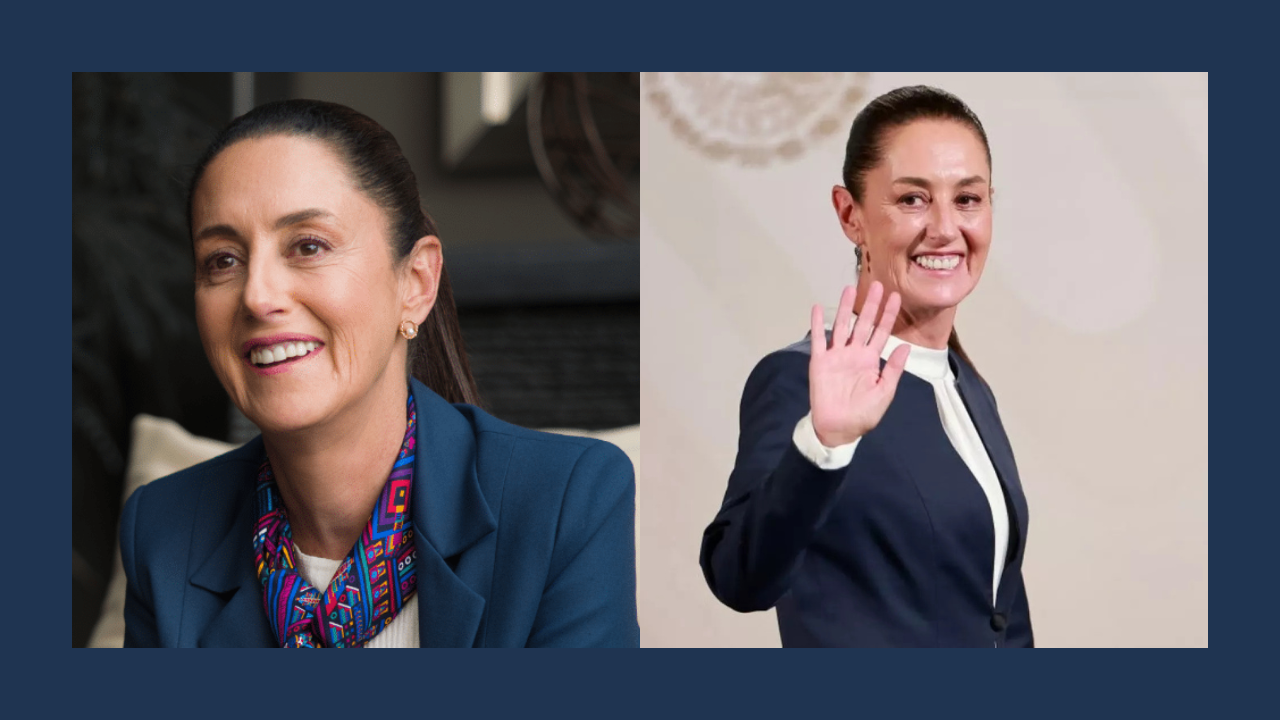
Early Life and Educational Foundation
Claudia Sheinbaum was born on June 24, 1962, in Mexico City into a family with deep scientific roots: her mother was a biologist, and her father was a chemical engineer. She grew up in an environment where science and intellectual curiosity shaped daily life, which laid the groundwork for her later academic and political endeavors.
Sheinbaum pursued her undergraduate studies at the National Autonomous University of Mexico (UNAM), earning a bachelor’s degree in physics. She then completed both a master’s degree (1994) and a Ph.D. in energy engineering (1995), also at UNAM. Her doctoral work included research at the Lawrence Berkeley National Laboratory in California, where she studied energy consumption trends in Mexico compared with other industrialized nations.
After earning her Ph.D., Sheinbaum joined UNAM’s Institute of Engineering in 1995 as a faculty member and researcher. There, she engaged in scientific research and published extensively, a testament to her commitment to science before entering the public sphere of politics.
This solid academic foundation, combining physics and energy engineering, later became a defining element of her political identity — shaping her approach to environmental policy, urban planning, and public service.
Claudia Sheinbaum Transition into Politics: From Scientist to Public Servant
Even as a student, Sheinbaum was politically active. During her time at UNAM, she participated in student movements advocating for public education and against tuition increases — early signs of her commitment to social causes.
Her formal entry into politics came in 2000 when she was appointed Secretary of the Environment for Mexico City under then-mayor Andrés Manuel López Obrador. In that role, she applied her technical expertise to real-world urban and environmental challenges, including initiatives to improve public transportation and reduce pollution in the densely populated capital.
Sheinbaum reentered electoral politics in 2015, when she was elected mayor (delegational head) of the Tlalpan district in Mexico City, marking her first office gained through popular vote. In 2018, she became Head of Government of Mexico City, becoming the first woman and first Jewish person to hold that position.
Her political trajectory demonstrates a blending of scientific expertise with governance: urban reforms, sustainability initiatives, and a technocratic style of leadership shaped by her education and energy expertise.
Claudia Sheinbaum Personal Life & Husband
Claudia Sheinbaum’s personal life has had its own journey, marked by two marriages and a family built alongside her evolving career.
Her first marriage was to Carlos Ímaz Gispert in 1987. The union lasted nearly three decades and ended in divorce in 2016. Together they had a daughter, Mariana Ímaz Sheinbaum, born in 1988. Through this marriage, Sheinbaum also became stepmother to Ímaz’s son from a previous relationship.
After the divorce, Sheinbaum reconnected with an old acquaintance, Jesús María Tarriba Unger. They had first met during their undergraduate years at UNAM. Over time, their paths crossed again, and after several years together, they married on November 17, 2023, in a private civil ceremony.
Tarriba is a physicist and works as a financial risk analyst at the Bank of Mexico. With Sheinbaum’s election in 2024 as President of Mexico, Tarriba assumes the informal role traditionally associated with the president’s spouse.
Sheinbaum rarely emphasizes private wealth or luxury, instead highlighting scientific integrity, public service, and social responsibility in both her public and private life.
Claudia Sheinbaum Net Worth and Financial Standing
Due to her long career spanning academia, research, and public office, estimates of Sheinbaum’s net worth vary, typically ranging from USD 5 million to USD 10 million.
Her wealth comes from multiple sources: her academic career (teaching, research, publications), government salaries from major offices she held, and modest investments or assets. Asset disclosures note ownership of a modest apartment in Mexico City and little involvement in private business ventures, reinforcing a public-service-oriented lifestyle.
Estimates vary, with earlier analyses suggesting lower amounts, while more recent ones reflect her rise to national prominence. Even at the higher end, her financial profile remains modest compared with many global political figures, as she does not have major private business holdings or extravagant assets.
How Her Education Shapes Her Leadership Style
A distinctive aspect of Sheinbaum’s public life is how her scientific education informs her political approach. Unlike many career politicians, she brings a “technocrat’s mindset”: analytical, data-driven, attentive to environmental and resource constraints, and oriented toward evidence-based policy.
As Head of Government of Mexico City, she prioritized sustainable urban policies: improving public transportation, enforcing environmental regulations, and reducing pollution. Her academic background also lent her credibility on climate and energy issues, including work with the Intergovernmental Panel on Climate Change (IPCC).
This blend of science and politics resonates in contemporary debates on climate change, urbanization, and sustainable development, illustrating how academic expertise can shape effective governance.
Claudia Sheinbaum Public Image, Perception, and Legacy
Claudia Sheinbaum’s journey — from physics student to researcher to political leader — has earned her recognition in Mexico and internationally. Her rise to high offices, including Head of Government of Mexico City and later the presidency, represents multiple breakthroughs: as a woman, as a person of Jewish heritage, and as a scientist-turned-politician.
Supporters view her as a leader who values education, science, and social equity. Her academic and engineering background contributes to her reputation for competence and pragmatism.
Critics, however, scrutinize decisions during her political career, including city management and infrastructure issues. Despite these challenges, her background combining research, governance, and social awareness continues to shape public perception.
Conclusion
Claudia Sheinbaum’s life exemplifies how academic rigor, technical expertise, and social commitment can converge into public leadership. From earning a physics degree and a Ph.D. in energy engineering, to contributing to global climate research, to governing one of the largest cities in the Americas and ascending to the presidency, her journey demonstrates the power of science-informed governance.
Her personal life — a long-term first marriage, motherhood, and later remarriage — reflects the balance many public figures maintain between private and public responsibilities. Her husband, Jesús María Tarriba, continues his professional career outside politics, serving as a private anchor in her life.
Financially, her net worth, though in the millions, remains modest compared with other global political elites, reflecting a lifestyle more aligned with public service than personal wealth accumulation.
Ultimately, Claudia Sheinbaum embodies intellect, service, and humility: a modern leader whose scientific foundation shapes how she approaches governance, sustainability, and Mexico’s future.
