
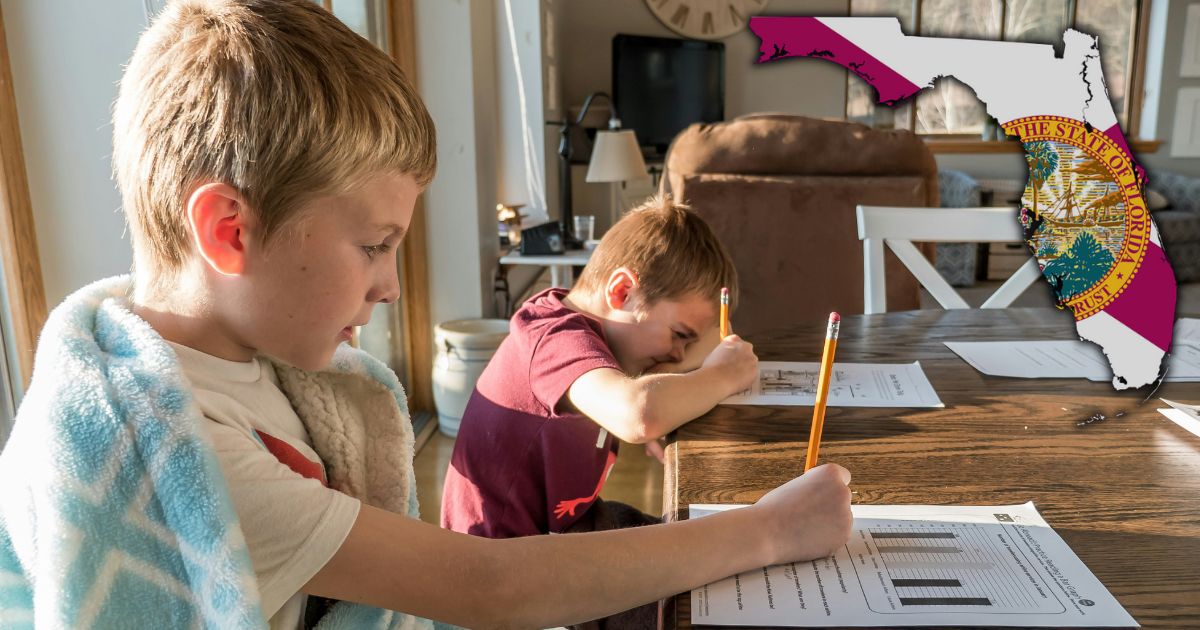
Every family that moves into homeschooling arrives with a different story. Some have watched a child disengage from a traditional school setting over months or years. Others have moved to Florida from another state and found that the schools available to them are not the right fit. Some have simply reached a point where they know their child is capable of more than their current environment is offering.
When families begin to compare top homeschooling programs in Florida, they are often surprised by how different each provider is, not just in curriculum but in structure, support, community, and overall philosophy. The transition process itself also varies enormously. What makes some families thrive after switching while others struggle comes down to a combination of preparation, fit, and the quality of the program they choose.
The following stories are drawn from the kinds of experiences that Florida homeschooling families commonly share. In the 2021-2022 school year, approximately 152,109 students were homeschooled in Florida. Names and identifying details are illustrative rather than drawn from specific individuals, but the challenges and breakthroughs they describe are real and recurring.
The Family That Needed More Flexibility
One family in the Tampa Bay area had a ten-year-old daughter who was academically advanced but emotionally exhausted by the social dynamics of her elementary school. She was finishing classroom work quickly, spending long stretches of the day bored, and coming home anxious and withdrawn. Her parents had tried requesting differentiated instruction and had advocated for enrichment opportunities, but the school’s capacity to individualize was limited.
After attending a local homeschool information night, they enrolled in a structured online program that offered an accelerated track. The transition was not seamless. Their daughter spent the first two weeks testing the limits of working from home, distracted by everything from the family dog to the refrigerator. Her parents found themselves more involved than they had expected to be.
The turning point came when they established a consistent daily routine that mirrored a school schedule in structure but allowed for flexibility in how each block was used. Their daughter began choosing her own start times for different subjects, working in the order that felt most natural to her. Within a month, the anxiety had noticeably decreased. By mid-year, she was completing grade-level coursework at a pace that kept her genuinely engaged, with time left over for art and music that she had never had room for before.
The Teenager Who Needed a Fresh Start
A fifteen-year-old in South Florida had spent two years in a large public high school where he felt largely invisible. He was not struggling academically in a dramatic way, but he was not flourishing either. His grades were inconsistent, his motivation was low, and he had begun to express a vague but persistent sense that school was something that happened to him rather than something he was participating in.
His parents researched several programs before choosing one that offered both live virtual classes and a self-paced component. They were drawn to the combination because their son needed the accountability of real-time teacher interaction but also the ability to slow down in areas where he needed more time without feeling left behind.
His first semester was largely about rebuilding habits and rebuilding his identity as a learner. The program assigned him an academic advisor who checked in monthly and helped him map out a course plan aligned with his interest in environmental science. Having a clear direction made a visible difference in his engagement.
By his junior year, he had completed two dual enrollment courses at a local college, something that would have felt unimaginable to him at fifteen. He applied to three Florida universities and was accepted to all of them. More importantly, he arrived at college knowing how to advocate for himself and how to manage his own learning, skills that his high school years had not given him the opportunity to develop.
The Elementary-Age Child With Learning Differences
A family in the Orlando area had a seven-year-old son with dyslexia. He had received some support through his public school’s special education program, but progress was slow and his self-esteem was taking a hit. He was starting to call himself a bad reader before he had really had a fair chance to learn.
His parents chose a homeschool program specifically because it allowed them to integrate an Orton-Gillingham-based reading approach alongside the standard curriculum. They worked closely with a reading specialist outside the program while using the program’s materials for other subjects. The flexibility to combine a structured literacy intervention with a broader academic program was something no traditional classroom could have offered at that stage.
The transition required significant adjustment from both parents. One parent shifted to part-time work in order to manage the additional instructional involvement. They also joined a local homeschool co-op where their son could connect with other children, which helped address concerns about social isolation.
Within a year, his reading had improved substantially. More importantly, his relationship with learning had shifted. He was no longer defined by what he could not do. He was beginning to know himself as someone who worked hard, who loved science and building things, and who happened to need a different route to reading than most of his peers.
What Successful Transitions Have in Common
Looking across these kinds of stories, a few patterns emerge. Families that transition successfully into homeschooling programs tend to take a careful onboarding period seriously rather than expecting things to work immediately. They invest time in understanding how their child learns best and choose a program that genuinely matches that profile rather than picking the first option they find.
They also tend to build community intentionally. Whether that means joining a local co-op, connecting with other families through the program, or organizing regular activities outside the home, the families that thrive do not try to do homeschooling in isolation.
Perhaps most importantly, the families that make successful transitions are honest with themselves about the level of involvement required. Homeschooling is a partnership between parent, child, and program. The quality of any program depends partly on the quality of the support it offers but also on the engagement of the family it serves.
Starting the Process Well
For families currently considering the shift, the most useful first step is a realistic self-assessment. What does your child need that they are not getting? What are you able to offer in terms of time and involvement? What kind of learning environment has your child responded to best in the past?
From there, looking at multiple programs with specific questions in mind will yield much better results than a general browsing process. Ask about accreditation, teacher availability, community, and outcomes. Speak with families who are already enrolled. If possible, try a trial period before making a longer commitment.
Florida has a growing and increasingly sophisticated ecosystem of homeschool providers. Families who take the time to find the right fit for their specific situation give themselves and their children the best possible chance of making the transition not just manageable but genuinely transformative.
