
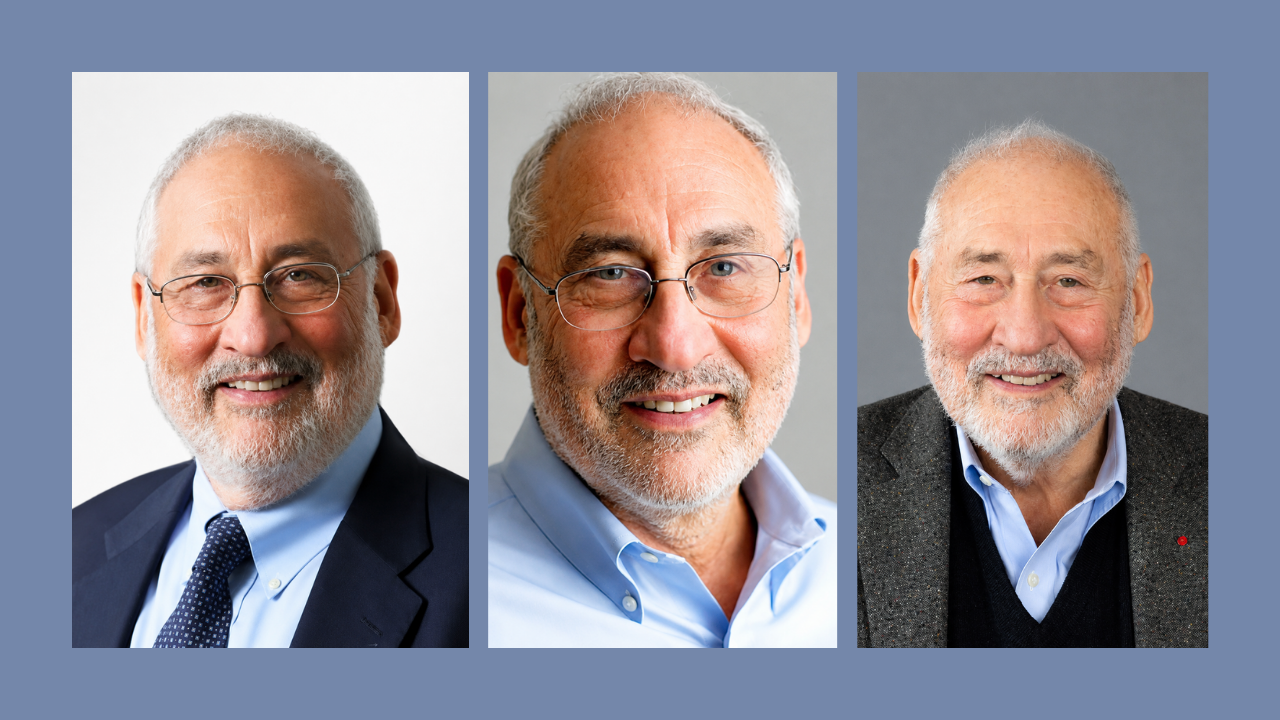
Joseph Stiglitz is one of the most influential economists of the modern era, widely recognized for changing the way economists understand markets, information, inequality, and the role of government. Over a career spanning academia, government, international organizations, and public policy, Joseph Stiglitz has become particularly well known for his pioneering work on asymmetric information. His research helped explain why markets do not always function perfectly when different participants have access to different levels of information. In 2001, he received the Nobel Memorial Prize in Economic Sciences for his analysis of markets with asymmetric information alongside George Akerlof and A. Michael Spence.
Joseph Stiglitz Age and Early Life
Joseph Eugene Stiglitz was born on February 9, 1943, in Gary, Indiana, United States. Based on his February 9, 1943 birth date, Joseph Stiglitz is 83 years old in 2026. He grew up in an environment that encouraged intellectual curiosity and eventually developed a strong interest in economics and mathematics. His decision to study economics was influenced by the possibility of using mathematical skills to understand important social and economic problems.
Stiglitz attended Amherst College, where he studied economics and developed the academic foundation that would shape his later career. He subsequently attended the Massachusetts Institute of Technology, earning his PhD in economics in 1967. His education at MIT played an important role in preparing him for a career in economic research, and he soon became known for challenging traditional assumptions about how markets operate.
Education and Academic Career
Joseph Stiglitz began building his academic reputation at a remarkably young age. After completing his doctoral studies, he held teaching and research positions at several leading universities. He became a full professor at Yale in 1970 and later taught at institutions including Princeton, Stanford, MIT, and Oxford. These positions allowed him to develop a broad body of research covering economics, public policy, information, markets, and income distribution.
In 1979, Stiglitz received the John Bates Clark Award from the American Economic Association. The award recognizes an American economist under the age of 40 whose work is considered to have made a significant contribution to the field. The recognition strengthened his reputation as one of the leading economists of his generation.
Stiglitz joined Columbia University in 2001 and was later given the institution’s highest academic rank, University Professor, in 2003. He has remained closely associated with Columbia’s research and policy community while continuing to write, teach, and contribute to international economic debates.
Joseph Stiglitz and the Theory of Asymmetric Information
One of Joseph Stiglitz’s most important contributions to economics is his work on asymmetric information. This concept describes situations in which one person or organization knows more relevant information than another participant in a transaction. Stiglitz demonstrated that such information differences can have major consequences for how markets operate.
Traditional economic models sometimes assume that buyers and sellers possess sufficient information to make efficient decisions. Stiglitz’s research showed why that assumption can be unrealistic. When information is unevenly distributed, people may behave differently, markets may produce inefficient outcomes, and organizations may need to create systems that encourage people to reveal information.
His research examined concepts such as screening and self-selection. Screening allows a less-informed party to design choices or contracts that encourage individuals with different characteristics to identify themselves. These ideas became important tools for economists, policymakers, and business analysts studying real-world markets.
This body of research ultimately contributed to Stiglitz receiving the 2001 Nobel Memorial Prize in Economic Sciences. The Nobel committee recognized Stiglitz, George Akerlof, and A. Michael Spence for their analyses of markets with asymmetric information.
Government Career
Stiglitz’s influence extends far beyond universities. He entered public service during the Clinton administration, becoming a member of the Council of Economic Advisers in 1993. He later served as chairman of the Council from 1995 to 1997, giving him a significant role in discussions surrounding economic policy in the United States.
During his government career, Stiglitz was involved with a wide range of policy issues. The Council of Economic Advisers worked on matters extending across the economy, including trade, competition policy, environmental issues, taxation, welfare, agriculture, energy, transportation, and broader economic policy. His experience in government gave him an opportunity to apply economic theory to practical policy challenges.
Joseph Stiglitz and the World Bank
After leaving the Council of Economic Advisers, Stiglitz became Senior Vice President and Chief Economist of the World Bank, serving from 1997 to 2000. His time at the World Bank strengthened his involvement in international development and economic policy, particularly concerning developing countries and poverty reduction.
Stiglitz has frequently emphasized that economic development cannot be understood simply by looking at overall economic growth. Institutions, access to information, inequality, education, public policy, and the distribution of economic opportunities can all influence whether growth produces broad improvements in living standards.
His experience at the World Bank also influenced some of his later writing and public criticism of international economic policies. He became an important voice in discussions about globalization, development, international institutions, and economic inequality.
Joseph Stiglitz Net Worth
Joseph Stiglitz net worth is a frequently searched topic, but there is no authoritative public source that provides a verified figure for his total personal wealth. Unlike some corporate executives or publicly traded company founders, Stiglitz does not have a publicly disclosed financial profile that would allow his complete assets and liabilities to be calculated reliably.
Various websites may publish estimates of Joseph Stiglitz net worth, but these figures should be treated cautiously because they generally do not provide independently verified evidence for the underlying calculations. His professional income has come from a long academic career, major institutional appointments, writing, research, speaking, and other professional activities, but his exact wealth remains private.
What can be established with confidence is the breadth of his professional career. He has held senior positions at major universities and international institutions, served in the U.S. government, won the Nobel Prize, and authored numerous influential books and academic works. These achievements have established him as one of the world’s most prominent economists, but they do not provide enough information to determine a precise net worth.
Joseph Stiglitz Books and Publications
Stiglitz has written extensively for both academic and general audiences. His publications cover subjects including globalization, inequality, economic policy, public institutions, and the functioning of markets. Some of his best-known works include Globalization and Its Discontents, The Price of Inequality, People, Power, and Profits, and Rewriting the Rules of the American Economy. His books have helped introduce complex economic debates to readers outside academic circles.
His writing is often characterized by an effort to connect economic theory with real-world outcomes. Rather than treating economics as an isolated mathematical discipline, Stiglitz frequently examines how economic decisions affect workers, consumers, governments, businesses, and societies.
Joseph Stiglitz on Inequality and Globalization
Income inequality has become another major focus of Stiglitz’s public work. He has argued that inequality can affect economic opportunity and that public policies can influence how wealth and opportunities are distributed. His research and writing have encouraged greater attention to the relationship between economic growth, institutions, and social outcomes.
Globalization has also been a recurring subject in his work. Stiglitz has examined the benefits and challenges associated with increasingly interconnected economies, including the way international institutions and economic policies can influence developing countries. His views have made him an influential participant in debates about international economic governance.
His research interests today span areas such as income distribution, risk, corporate governance, public policy, macroeconomics, and globalization.
Joseph Stiglitz Awards and Achievements
The Nobel Memorial Prize in Economic Sciences remains the defining achievement of Joseph Stiglitz’s career. However, it is only one part of a much longer list of accomplishments. He received the John Bates Clark Award in 1979 and has been elected to prominent academic organizations, including the National Academy of Sciences and the American Academy of Arts and Sciences.
Stiglitz was also a lead author of the 1995 report of the Intergovernmental Panel on Climate Change, which shared the 2007 Nobel Peace Prize. In 2011, Time named him among the world’s 100 most influential people. Columbia University has also recognized his continuing contribution by granting him the rank of University Professor.
In more recent years, his work has continued to address inequality, economic measurement, public policy, development, and global economic challenges. Columbia’s biography also notes his involvement with international initiatives concerning corporate taxation, inequality, and economic development.
Joseph Stiglitz’s Legacy
Joseph Stiglitz’s legacy is built on his ability to connect economic theory with practical problems. His work on asymmetric information changed how economists think about markets in which participants do not possess equal knowledge. His research helped establish information economics as an important area of modern economic study and introduced concepts that are now widely used in economic analysis.
Beyond academia, Stiglitz has influenced public discussions about globalization, inequality, international development, and government policy. His career demonstrates how an economist can contribute not only through theoretical research but also through government service, international organizations, education, and public debate.
Conclusion
Joseph Stiglitz has built an extraordinary career as an economist, professor, author, government adviser, and international policy expert. Born on February 9, 1943, he is 83 years old in 2026 and remains associated with Columbia University. His academic journey from Amherst College and MIT to leading universities helped establish him as a major figure in modern economics.
While a precise Joseph Stiglitz net worth cannot be reliably established from authoritative public information, his professional achievements are well documented. His Nobel Prize, government service, World Bank leadership, extensive research, and influential publications have made him one of the most recognized economists of his generation. His continuing work on information, inequality, globalization, and public policy ensures that Joseph Stiglitz remains an important voice in economic discussions around the world.
