
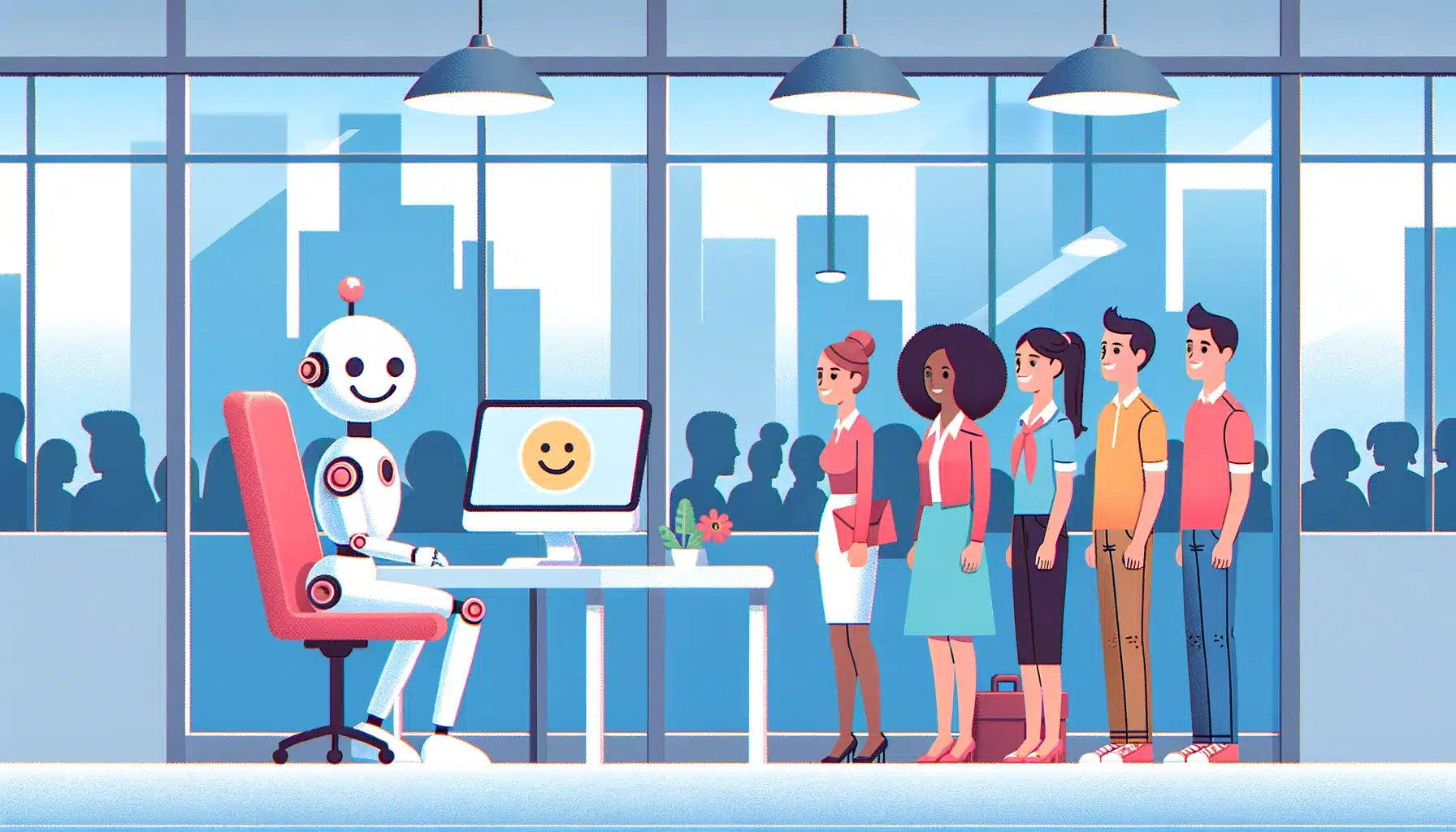
Maybe at some point you ask yourself: What does AI automation mean in a business context? Is it really necessary for my business? You can have the answer when you try this tool and improve your operations. For years, many companies worked with rule-based systems, and at some point, it really worked. But, people change, and their preferences too, so manual operations aren’t available anymore; With the necessity of reduce responses time and creating better communication, businesses select intelligent automation, optimized sales, customer service, and production.
In the late 2010s and in the following years, the use cases of AI automation focused on high-volume, rule-based, and repetitive tasks. In general, with artificial intelligence, you can have exceptional benefits, because it is created to improve every process and reduce human error. It’s normal that many companies decide to select it, especially in customer service and sales.
It’s time for you to have a complete explanation of AI agents, so follow us and know this path from automation to autonomy that changes your operations and workflows. Let’s start it!
The Limits of Traditional Automation
Before intelligent automation existed, many companies opted for traditional automation. This type of automation is limited to resolving simple situations and responding to frequent queries, without any internal analysis or reasoning. While there’s nothing inherently wrong with it, it does have certain limitations for current procedures.
Static workflows and predefined rules
Traditional automation helps reduce repetitive tasks; however, this doesn’t mean it creates fluid workflows. On the contrary, its action is limited to static management and predefined rules. Therefore, rather than an intelligent and independent solution, it requires a human agent to verify that everything is done correctly.
Lack of contextual understanding
Traditional automation works in a predefined way, meaning it responds based on the specific message sent by the client. The problem is that if the message isn’t well-written or doesn’t contain the required keywords, the bot won’t be able to understand the request and, therefore, won’t be able to manage any action. This lack of understanding of the context leads to frustration on the other side and, consequently, delays in any process.
Why automation alone cannot handle complex tasks
The main reason this technology is insufficient is that it operates based on what is known and fails to capture uncertainty. While it can detect keywords, it doesn’t identify if the customer is sarcastic, annoyed, or if the situation is urgent. It’s important to keep in mind that any standard business process handles 80% of cases, leaving that 20% for unique situations that have never occurred and that a traditional automation tool will not be able to resolve.
What Makes AI Agents Different
As traditional automation fell short, companies needed a tool that could truly function as a representative but also save costs and reduce repetitive tasks. This led to the creation of AI agents, which differ significantly from traditional intelligent tools.
Perception, reasoning, and decision-making
If there’s one thing AI agents offer, it’s the ability to perceive, reason, and make decisions. They don’t need keywords; even if the customer doesn’t word their needs clearly, the agents will understand what they mean and will decide on the appropriate action. If it’s a sales call, they can recommend products, and if it’s simply guidance, they can lead the customer to the correct solution. So, you acquire a human agent that doesn’t require rest periods and is available 24/7 without interruption.
Memory and contextual awareness
AI agents are like elephants; they don’t forget. This means that if a customer contacted them before, no matter how much time has passed, the agent will remember them perfectly and, if necessary, will continue the unfinished task. This makes them an efficient tool with contextual awareness that helps drive a company’s growth.
From task execution to goal-oriented behavior
AI agents are known for resolving situations and managing tasks; however, their focus goes far beyond that, as they are programmed to achieve objectives. Therefore, more than just an effective tool, we are talking about an intelligent ally with a clear goal focused on increasing a company’s production and sales.
From Automation to Autonomy: The Evolution
Like everything else in life, intelligent programs also evolve; in the case of automation, it went from being semi-dependent programs to transforming into autonomous systems that do not require human assistants to constantly verify their needs.
Assisted systems vs autonomous agents
Automated actions, in most cases, require assistance from a representative, especially if the program struggles to understand the client’s requirements. AI agents, on the other hand, are autonomous programs that better understand and process each action, and only require human assistance when absolutely necessary.
Human-in-the-loop vs fully autonomous workflows
Workflows with human intervention have not been discarded because they offer a genuine connection with the client and contribute an excellent level of creativity to each process. Now, it is true that it has certain complications and higher costs, which is why fully autonomous workflows have been selected, which have static responses, linear scalability, and lower costs.
AI Automation in E-commerce and Digital Channels
The best thing about AI automation is that it adapts perfectly to e-commerce and digital channels, bringing greater efficiency and agility to marketing management.
Campaign optimization and personalization
AI automation is evolving towards agent-controlled systems in e-commerce. Shopify marketing is a prime example, offering:
- A real-world environment where AI agents go beyond programmed automation.
- Data-driven actions to enhance personalization.
- Campaign adjustments, audience segmentation, and automatic activation of personalized offers.
Meet Kommo’s Shopify AI agent: Your smart selling assistant
Managing customer journeys across platforms
Every company must strive to offer an excellent customer experience; therefore, it is essential to consider different platforms that can enhance customer satisfaction. One of the most popular examples is WhatsApp AI, which offers personalized and effective conversations and, in turn, optimizes your company’s business performance.
Conclusion: Benefits of Moving from Automation to AI Agents
In short, we know that traditional systems are not that bad and really can improve a lot of business processes; but when you start to work with this kind of tool, you start to achieve a lot of benefits, like
- Greater efficiency and scalability in every operation,
- Improved decision quality in the conversational process.
- Reduced manual intervention to improve the work team.
This is your sign to move from automation to AI agents and achieve all the excellent results that artificial intelligence can give to you. Start now and improve your operation
Visit More : magazineness.co.uk
