
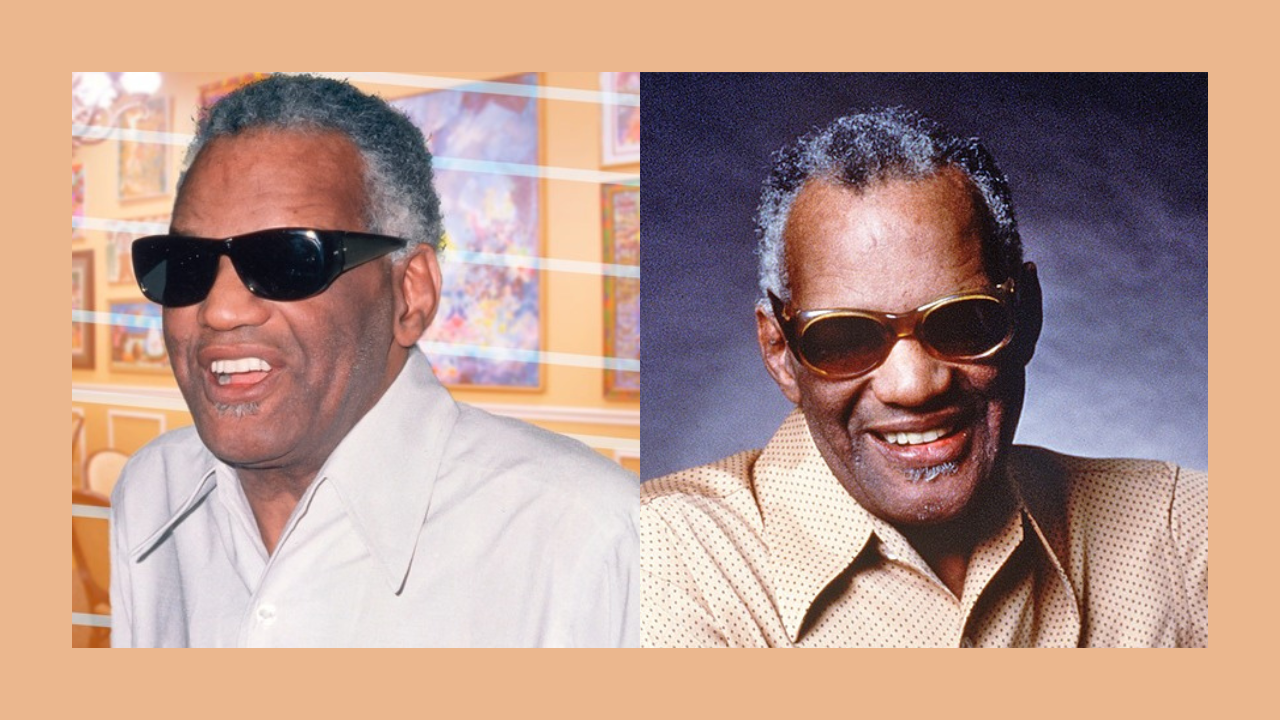
Early Life and Personal Background
Ray Charles was born on September 23, 1930, in Albany, Georgia. He grew up in a household marked by hardship, raised primarily by his mother, Aretha, after early family struggles. One of the earliest and most painful tragedies of his childhood was the death of his younger brother, George. This loss shaped him deeply and influenced the emotional intensity that would later be felt in his music and personal life.
As a child, Ray gradually lost his vision due to glaucoma, becoming completely blind by the age of seven. Despite this immense challenge, he developed extraordinary discipline and determination. During his youth, Ray devoted significant time focusing on his growing personal abilities and skills, which helped him adapt to life despite his disability. His early years were defined by perseverance, and his difficult upbringing played a major role in shaping his character, relationships, and family life.
Ray Charles Marriages: Stability, Strain, and Significant Relationships
Ray Charles was married twice. His first marriage was to Eileen Williams in 1951, a union that lasted only a year and ended in 1952. They had no children together and moved on to separate paths shortly afterward.
His second marriage was to Della Beatrice Howard Robinson, widely known as “Bea.” They met in the mid-1950s and married in 1955. In the early years, their relationship was stable, and they built a home together while Ray’s career was rising. They had three sons, and for a time, their family life followed a traditional pattern.
However, Ray’s personal issues—including drug addiction and infidelity—created significant strain over the years. The combination of his demanding career and lifestyle challenges led to distance in the marriage. Eventually, Della filed for divorce, and their marriage ended in 1977. Even after their separation, the relationship remained one of the defining personal chapters of Ray’s life.
Ray Charles Children: A Large, Diverse, and Complex Family
Ray Charles fathered 12 children with 10 different women, making his family tree wide and complex. His children came from different stages of his life, and many of them grew up in separate households, creating a scattered yet interconnected family story.
Children with Della Beatrice Howard Robinson
Ray and Della had three sons together:
- Ray Charles Robinson Jr., born in 1955
- David Robinson, born in 1958
- Robert Robinson, born in 1960
These sons experienced more of Ray’s traditional family structure, although they lived through the turbulence caused by his addictions and career pressures.
Ray Charles Children from Other Relationships
Outside marriage, Ray had nine additional children with various partners. Among them were:
- Evelyn Robinson, believed to be his eldest child
- Charles Wayne Hendrix, born during the period of Ray’s marriage to Della
- Renee Robinson
- Sheila Raye Charles, who later became known for her own voice and story
Ray’s other children were born across different decades, with mothers from different parts of his life. The result was a blended family full of unique backgrounds, experiences, and relationships.
Family Challenges and Dynamics
Because Ray’s children were raised in separate environments, relationships among them varied widely. Some had close bonds with Ray; others saw him less frequently. After Ray’s passing, these different experiences contributed to emotional complexities and disagreements regarding his legacy.
Family disputes became more intense when inheritance and rights were discussed, especially since Ray had such a large family with varied connections to him. This diversity of experiences made the family structure both rich and difficult to manage.
Ray Charles Financial Legacy and Net Worth
At the time of his death on June 10, 2004, Ray Charles had an estimated net worth of approximately $75 million. This wealth came from decades of record sales, royalties, successful tours, real estate investments, and long-term music publishing contracts.
Estate Distribution
Before his passing, Ray made clear provisions for his children. Each of his 12 children received a trust of $500,000, for a total payout of about $6 million. Beyond this, Ray allocated most of his fortune—including royalties, rights to master recordings, and intellectual property—to a charitable foundation created in his name.
This decision was intended to preserve his legacy responsibly and ensure that his music and influence continued to support educational and charitable causes.
Disputes Over Royalties and Rights
Despite Ray’s estate planning, conflicts arose among his children after his death. Several believed they were entitled to ongoing royalty rights or a larger share of his music catalog. Some filed lawsuits seeking ownership or partial control of his master recordings and intellectual property.
Ultimately, the courts ruled that the foundation established by Ray Charles had rightful control over his musical legacy. While this legally resolved the disputes, the emotional tension among family members remained. The situation highlighted the challenges that arise when a high-profile figure with a large blended family leaves behind valuable intellectual property.
Ray Charles Family Legacy and Life After Ray
Ray Charles’s children have continued to honor his memory in different ways. Some remain active in public life through books, advocacy, or public appearances on their father’s contributions. Others live privately, choosing quiet lives away from fame.
The values Ray instilled—resilience, creativity, and self-belief—are often mentioned by his children. Even though Ray lived a complicated life and faced personal struggles, he tried to provide for his family and shape a legacy that extended beyond financial wealth.
His decision to establish a foundation reflects his desire to impact future generations, not just his own descendants. While some children disagreed with the distribution of his assets, many still acknowledge the importance of his broader legacy.
Conclusion: A Life of Triumph, Complexity, and Enduring Influence
When exploring Ray Charles’s life—his children, his wife, his relationships, and his net worth—we uncover a deeply human story behind the iconic musician. His personal journey was filled with triumphs over adversity, complex relationships, and an ongoing effort to balance career, family, and responsibility.
He fathered twelve children, experienced a lengthy marriage marked by both warmth and strain, and built a financial legacy worth tens of millions. His choices regarding inheritance reflected both generosity and an attempt to preserve his artistic legacy for future generations.
Ray Charles’s life reminds us that behind every legendary figure lies a person shaped by hardship, love, mistakes, successes, and an unwavering drive to leave a mark. His personal story, like his music, remains powerful, emotional, and unforgettable.
