
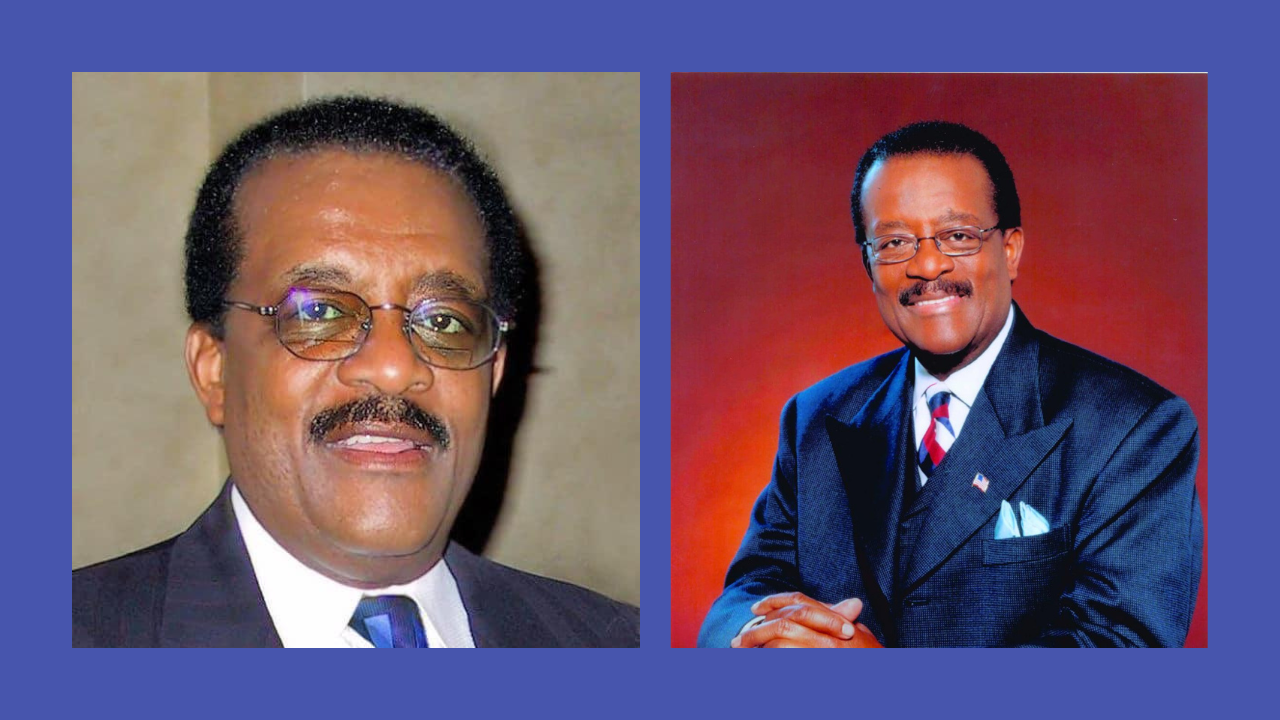
Johnnie Cochran was one of the most recognizable attorneys in modern American legal history. Known for his confident courtroom presence, persuasive arguments, and work on high-profile civil rights and criminal defense cases, Cochran built a career that extended far beyond the cases that eventually made him a household name. He represented celebrities, athletes, and individuals who alleged police misconduct, while also becoming an influential figure in discussions about race, justice, and the American legal system. Although his involvement in the O.J. Simpson trial brought him international attention, that case represented only one part of a much longer professional journey. His career began decades earlier in Los Angeles, where he developed a reputation for taking on difficult cases and advocating for clients who believed they had been treated unfairly.
Johnnie Cochran Early Life and Education
Johnnie Lee Cochran Jr. was born on October 2, 1937, in Shreveport, Louisiana. His family later moved to California, where he grew up in the Los Angeles area and attended Los Angeles High School. His early experiences in California played an important role in shaping his ambitions. Cochran became an excellent student and eventually attended the University of California, Los Angeles, where he earned a bachelor’s degree in 1959. He then studied law at Loyola Marymount University, completing his law degree in 1962. His educational background provided the foundation for a legal career that would eventually make him one of the country’s best-known attorneys.
Cochran’s entry into law was significant because he entered a profession in which African American attorneys were still underrepresented. While attending law school, he became the first African American law student to intern in the Los Angeles City Attorney’s Office. After completing his studies, he worked as a deputy city attorney and handled criminal matters. Those early courtroom experiences helped him develop the trial skills that later became a defining feature of his professional identity. In 1965, Cochran left government service and began building his private practice, eventually establishing himself as a formidable trial lawyer.
Johnnie Cochran Career and Rise to Prominence
During the early stages of his career, Cochran increasingly focused on cases involving civil rights, police misconduct, and personal injury. His work demonstrated that his ambitions extended beyond representing wealthy or famous clients. He became particularly recognized for representing people who believed that law enforcement agencies or other powerful institutions had treated them unjustly. In 1978, he joined the Los Angeles County District Attorney’s Office, where he became a senior attorney and worked on initiatives involving law enforcement practices and domestic violence. He returned to private practice in 1981, where he continued handling major civil and criminal cases.
One important part of Cochran’s professional legacy was his representation of victims of alleged police brutality. He handled cases involving families who sought accountability after deaths involving law enforcement and represented Abner Louima, a Haitian immigrant who was assaulted while in police custody in New York. His work in these cases strengthened his reputation as an attorney willing to challenge powerful institutions. UCLA’s profile of Cochran similarly emphasizes that his career included not only celebrity clients but also people who had experienced serious injustice.
Johnnie Cochran and the O.J. Simpson Trial
Johnnie Cochran became internationally famous during the 1995 murder trial of former football star O.J. Simpson. Cochran served as the lead attorney for Simpson’s defense team, commonly referred to as the “Dream Team.” The trial attracted enormous public attention and became one of the most heavily covered legal proceedings in American history. Cochran’s courtroom presentation, memorable arguments, and ability to communicate complex issues to a television audience helped turn him into a national celebrity.
The defense challenged important aspects of the prosecution’s evidence and raised questions about the handling of the investigation. Cochran’s closing arguments became especially memorable, and his famous phrase concerning the glove became closely associated with the trial. Simpson was ultimately acquitted of the criminal charges. The verdict generated intense debate throughout the United States, but it also cemented Cochran’s position as one of the most famous trial lawyers of his generation.
Johnnie Cochran Net Worth
Questions about Johnnie Cochran’s net worth remain common because his legal career brought substantial financial success. However, there is no single independently verified figure that can definitively establish his wealth at the time of his death. A 1995 Los Angeles Times profile reported that Cochran himself did not dispute an estimate placing his worth between $5 million and $6 million at that time. The report described several real estate holdings, including his Los Feliz home, beachfront condominiums, and apartment units, illustrating that his wealth was not based solely on income from courtroom work.
Some later sources have estimated that Cochran’s net worth was approximately $8 million when he died in 2005. That figure should be treated as an estimate rather than an audited financial record. His income came from a highly successful legal practice, major civil cases, high-profile criminal defense work, and other professional activities. His financial success also reflected the growth of his law firm and the substantial fees associated with major litigation.
Cochran also used part of his wealth for charitable and community causes. The Los Angeles Times reported that he contributed significant amounts toward low-income housing, scholarships, and community institutions. His financial story therefore involved both personal success and a stated commitment to giving back.
Johnnie Cochran Wife and Family Life
Johnnie Cochran’s personal life included two marriages. His first wife was Barbara Jean Berry, whom he married around the beginning of his legal career. The couple had two daughters, Melodie and Tiffany, before their marriage ended in divorce in 1977. Their relationship later became the subject of public discussion, particularly after allegations concerning their marriage appeared in the media and in Berry’s own memoir. Cochran disputed allegations of physical abuse made against him.
Cochran later married Sylvia Dale Mason. The couple had met in 1981 and married in 1985. Mason worked as a market research analyst and had professional experience with major companies. Contemporary reporting portrayed her as having a career of her own rather than simply being known through her husband’s public reputation. Cochran remained married to Sylvia for the remainder of his life.
Cochran also had a son, Jonathan, from a relationship outside his first marriage. His family life consequently received attention throughout his public career, although his professional achievements remained the central focus of his public identity.
Johnnie Cochran’s Other Famous Clients
Although the O.J. Simpson case was the most famous chapter of Cochran’s career, he represented numerous other prominent clients. His legal work included cases involving Michael Jackson, Sean Combs, Geronimo Pratt, Abner Louima, Jim Brown, Todd Bridges, and other well-known figures. This broad client list demonstrated his ability to work across criminal defense, civil litigation, and civil rights matters.
Cochran’s reputation was built partly on his ability to communicate effectively. He understood that a successful trial lawyer needed more than knowledge of legal rules; courtroom presentation, preparation, questioning, and persuasive storytelling could also have a major impact. His style made him particularly effective in cases that received extensive public attention.
Johnnie Cochran Later Years and Death
After decades of legal work, Cochran gradually reduced his involvement in criminal defense. He announced his retirement from criminal practice after the Sean Combs case and spent his later years focusing on other professional and personal activities. He had already become a prominent public figure, and his books provided another opportunity to discuss his experiences and philosophy. His publications included Journey to Justice and A Lawyer’s Life.
Cochran was diagnosed with a brain tumor in 2003 and underwent surgery in 2004. His health subsequently declined, and he died at his Los Angeles home on March 29, 2005, at the age of 67. His death marked the end of a career that had lasted roughly four decades and had taken him from local government work to the center of some of America’s most consequential legal controversies.
Johnnie Cochran’s Legacy
Johnnie Cochran’s legacy is broader than his celebrity courtroom appearances. He helped establish a model of legal advocacy that combined aggressive courtroom representation with attention to civil rights and police accountability. UCLA describes him as an attorney who represented both famous clients and people who had suffered serious injustice, reflecting the range of his professional interests.
His influence also continues through institutions and educational recognition. A school he attended in Los Angeles was later renamed Johnnie L. Cochran Jr. Middle School, reflecting the community’s recognition of his achievements. His name remains closely associated with courtroom advocacy, civil rights litigation, and the changing role of lawyers in highly publicized American trials.
Conclusion
Johnnie Cochran’s life combined academic achievement, legal ambition, financial success, family experiences, and a highly influential courtroom career. Born in Louisiana and raised in California, he progressed from a promising student to a nationally recognized attorney whose work reached far beyond the O.J. Simpson trial. His estimated net worth reflected decades of successful legal practice and investments, while his marriages to Barbara Berry and Sylvia Dale formed important parts of his personal story. Although his career included controversy and intense public scrutiny, Cochran’s lasting reputation rests on his courtroom skills, civil rights advocacy, and willingness to represent clients facing powerful opponents. He died at 67 in 2005, but his name remains an important part of the history of American law and high-profile trial advocacy.
